
Cooling Towers FRP Grating Solutions
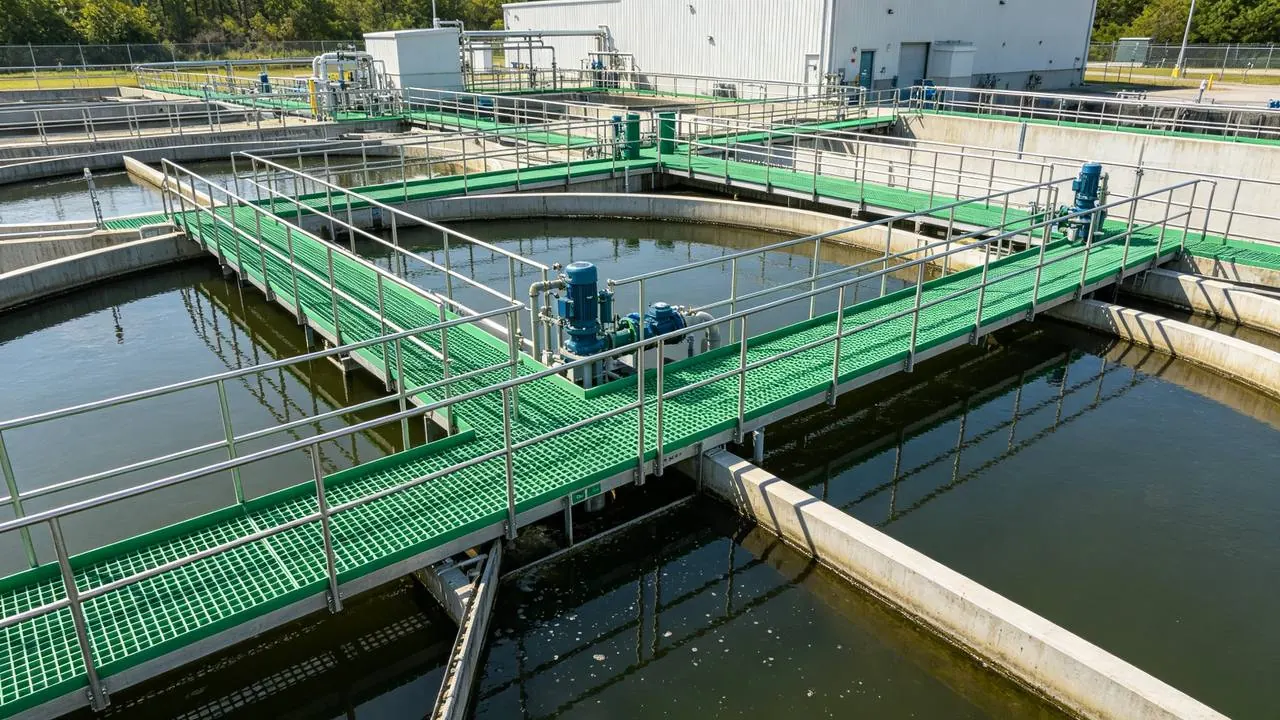
Why Cooling Towers Needs FRP
Cooling towers are perpetually wet, chemically treated and thermally cycled — a worst-case environment for steel and timber. FRP grating and structural profiles carry fill, support walkways and resist the treatment chemicals that corrode metal.- Wet/dry cycling accelerates metal corrosion
- Water treatment chemicals attack structures
- Constant moisture promotes rot in timber
- Access above hot, humid water basins
ZeAllgrate Solutions for Cooling Towers
ZeAllgrate molded grating and structural profiles are specified for cooling tower internals — chemical-resistant, thermally stable and maintenance-free for decades.
Typical Applications
Fill support grids
Fan deck walkways
Distribution basin covers
Drift eliminator supports
Access ladders & stairs
Maintenance platforms
Project Gallery
Real ZeAllgrate FRP grating products and installations in service across this industry.
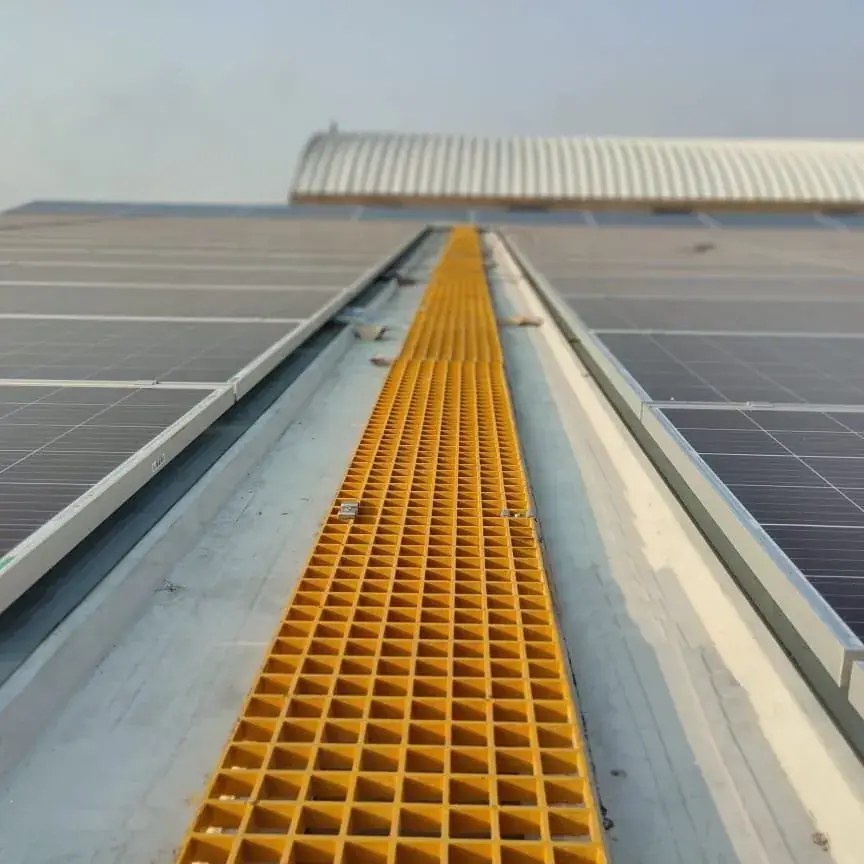
FRP fill-support grating grid in a cooling tower basin
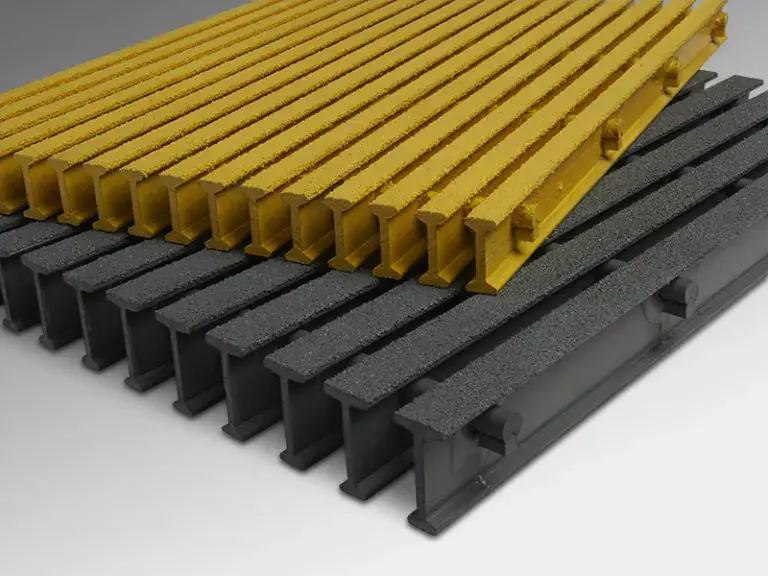
FRP structural bars for drift eliminator support
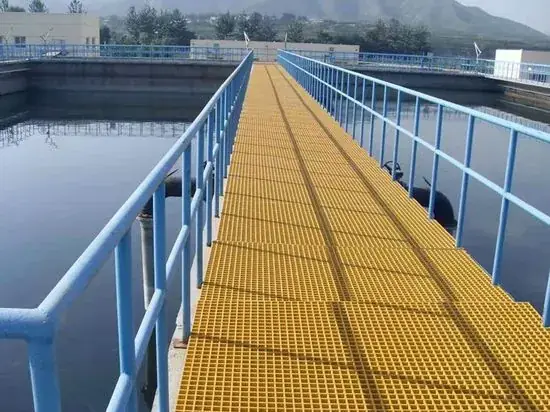
Anti-slip FRP fan-deck walkway above a hot water basin
Solutions for Every Process Area
Engineered FRP solutions mapped to each stage of your facility — from corrosive process zones to high-traffic access routes.
Platforms over fill media and distribution basins.
Access walkways around fans with fire-retardant options.
Covers and walkways over water basins resisting treatment chemicals.
Non-conductive ladders and handrails throughout the tower.
Technical Specifications & Compliance
Application-specific engineering reference for Cooling Towers — corrosion rating, load criteria, governing codes and the recommended ZeAllgrate configuration. Use this as the specification starting point; final design must be verified against certified load/span charts and the project's governing codes.
| Parameter | Specification for Cooling Towers |
|---|---|
| Corrosion Level | High Perpetual wetness, water-treatment biocides/corrosion inhibitors and thermal cycling (hot/cold basin). |
| Typical Load Requirements | Fill-support & distribution decks 50 psf (2.4 kN/m²) pedestrian plus fill-media dead load; fan-deck access 75 psf (3.6 kN/m²); vibration at fan drives considered. |
| Applicable Standards & Regulations | CTI (Cooling Technology Institute) accepted practice, OSHA 1910.23 & 1910.29, ISO 14122, ASME (where pressure-vessel-adjacent), local boiler & pressure-vessel code. |
| Recommended Resin System | ZeAll ISO for general fill & walkway service; ZeAll VE where makeup-water chemistry is aggressive (high chloride, acidic pH); ZeAll FR for fan-deck fire zones. |
| Recommended Grating Type | Molded 38.1/50.8 mm fill-support grids & basin covers; Pultruded I5020 fan-deck walkways; structural profiles for drift-eliminator support; all components non-conductive. |
Resin systems: ZeAll VE (vinyl ester — severe corrosion), ZeAll ISO (isophthalic polyester — general service), ZeAll FDA (food/potable grade), ZeAll FR (extra flame-retardant), Phenolic (fire/smoke-critical). Grating types: Molded (bi-directional), Pultruded (long-span), Mini-Mesh (fine openings), HLC (high-load capacity).
Cooling Tower Service Conditions
| Condition | ZeAllgrate Response |
|---|---|
| Chlorine / bromine treatment | Vinyl ester for the water side |
| UV & temperature cycling | UV-stabilised grades for exposed zones |
| Permanent moisture | No corrosion, no paint programme |
| Fill & drift service | Lightweight panels; easy access and inspection |
Specification Guidance
Specify vinyl ester where panels sit in the treated water, UV-stabilised resin for the sun-exposed decks, and grit-top on traffic surfaces — tower decks stay wet and slippery. Fans and circulating pumps impose vibration on decks, so match the span to the load table with the deflection limit applied and check the natural frequency where machinery sits on long spans. SS316 clips and pultruded framing complete the package; the lightweight panels install without cranes between fills.
Go Deeper with the ZeAllgrate Knowledge Base
Have a Cooling Towers Project?
Send us your application and environment details — our engineers respond within 24 hours with a technical solution.
Cooling Towers Challenges & FRP Grating Solution
Cooling Towers facilities face corrosive, wet and high-traffic conditions that steel, concrete and wood cannot serve cost-effectively. The table below maps each field challenge to the conventional-material failure mode and to the ZeAllgrate FRP advantage.
| Challenge | Steel / Conventional Issue | FRP Grating Advantage |
|---|---|---|
| Hot, continuously wet environment | Steel support structure corrodes rapidly in hot, humid air | FRP is immune to hot, humid atmospheres — no rust, no pitting |
| Water treatment chemicals (chlorine, biocides, acid) | Galvanized steel fails within months from biocide attack | Vinyl ester FRP resists chlorine, bromide and pH swings in the recirculating water |
| Biological growth (algae, slime) | Steel surfaces trap biofilm in pitted rust; difficult to clean | Smooth resin surface; easy to pressure-wash; no pitting for biofilm to anchor in |
| Internal maintenance access | Steel platform panels are heavy and difficult to lift into a confined tower | Lightweight FRP panels — often one person can position them by hand |
| Electrical safety near fans & motors | Steel is conductive; creates a shock risk near live fan motors | FRP is non-conductive, improving electrical safety around drives and switchgear |
Recommended Resin & Surface System for Cooling Towers
Resin choice is the single most important specification decision. Match the resin to the worst-case chemical and thermal exposure in each zone, and choose the surface finish for slip resistance and cleanability.
| Application Zone | Resin | Surface Finish | Notes |
|---|---|---|---|
| Fill support & internal structure | Vinyl ester (VE) | Smooth / concave | Direct hot water + biocide contact |
| External walkways & stairs | Vinyl ester or isophthalic | Grit-top | Wet; high foot traffic |
| Drift eliminator access | Vinyl ester | Smooth | Frequent chemical and splashing contact |
| Fan deck & peripheral platform | Isophthalic (ISO) | Grit-top | General outdoor ambient service |
Recommended FRP Grating Products for Cooling Towers
ZeAllgrate supplies the molded, pultruded, anti-slip and fire-rated grating panels most commonly specified for this industry. Click through to each product page for load/span charts and datasheets.
Pultruded FRP Grating
Unidirectional pultruded profiles for long spans, higher load capacity and structural framing.
Molded FRP Grating
Bi-directional molded grating — the general-purpose workhorse for walkways, flooring and drainage.
Anti-Slip GRP Grating
Grit-top / concave surface systems for permanently wet, oily or high-slip-risk traffic zones.
Phenolic FRP Grating
Low-smoke, low-toxicity phenolic resin for fire-rated and confined-space applications.
Buyer’s Checklist for Cooling Towers FRP Grating
Use this checklist when issuing RFQs or reviewing supplier submittals. Each item is a common source of cost, delay or premature failure in this industry.
| Check Item | Specification | Why It Matters |
|---|---|---|
| Temperature rating | Continuous service 60–80 °C (140–176 °F) | Resists hot water below the fill without resin softening |
| Chemical resistance | Vinyl ester rated for chlorine, biocides, pH 4–10 | Prevents resin attack from treatment chemicals |
| Non-slip surface | Grit-top on all walkways and stairs | Prevents slips on permanently wet, algae-prone surfaces |
| Lightweight panels | Typically ≤25 kg per standard panel | Easier and safer installation inside a confined tower |
| Fire rating | Flame-retardant resin, Class 1 / BS 476 | Required near fan motors and switchgear |
| Edge sealing | All cut edges resin-sealed at the factory | Stops water wicking into the glass fibers |
Cooling Towers FRP Grating — FAQs
What temperature can FRP grating handle inside a cooling tower?
Vinyl ester FRP grating is rated for continuous service up to roughly 80 °C (176 °F), with short excursions higher. That covers the bulk water temperature of most open recirculating cooling towers. Isophthalic resin should be limited to about 60–65 °C continuous.
Is vinyl ester resin necessary for cooling tower grating?
For the wet internal zones directly exposed to recirculating water, chlorine/biocides and elevated temperature, yes — vinyl ester is strongly recommended. On external walkways exposed only to ambient humidity, isophthalic is usually adequate.
How long does FRP grating last in a cooling tower?
In properly specified vinyl ester grating, a 15–25 year service life with no painting or corrosion maintenance is typical. Steel gratings in the same environment often need replacement within 3–7 years.
Why FRP Grating for Cooling Towers?
FRP grating for cooling towers: temperature-resistant up to 120 C, corrosion-proof to cooling water chemicals. Internal walkways and platforms.