Transportation & Infrastructure FRP Grating Solutions
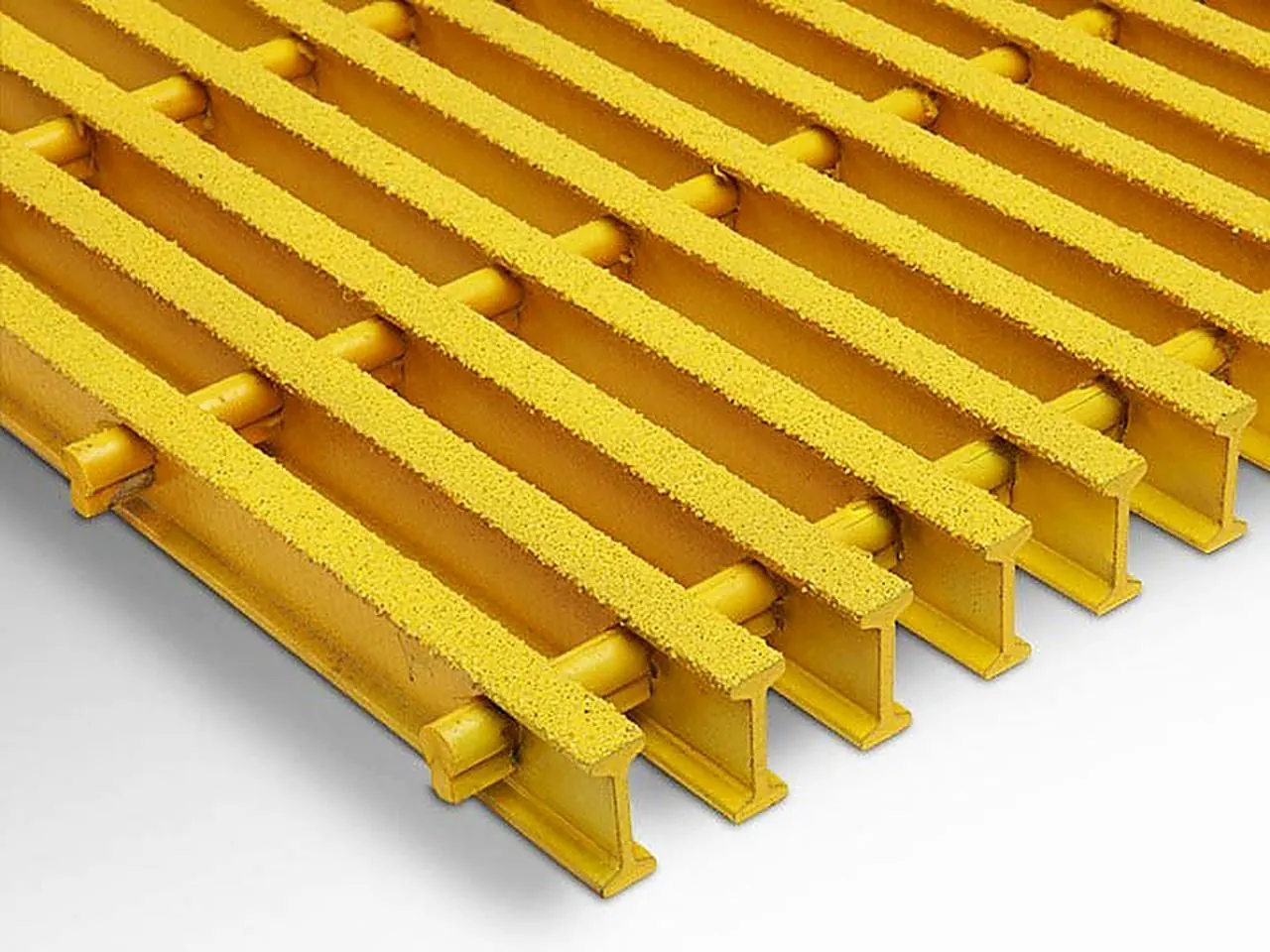
Why Transportation & Infrastructure Needs FRP
Infrastructure assets must last decades with minimal maintenance. FRP grating — lightweight, corrosion-proof and non-conductive — serves bridge walkways, rail platforms and roadside maintenance decks where steel and timber fail.- Bridge deck corrosion and de-icing salt attack
- Weight limits on existing structures
- Traffic vibration loosening conventional fixings
- Electrical safety near rail infrastructure
ZeAllgrate Solutions for Transportation & Infrastructure
ZeAllgrate pultruded grating and handrail systems are engineered for infrastructure: high stiffness, fatigue resistance and installation with standard tools on live assets.
Typical Applications
Bridge inspection walkways
Rail station platforms
Highway maintenance decks
Tunnel access walkways
Roadside equipment platforms
Transit facility mezzanines
Project Gallery
Real ZeAllgrate FRP grating products and installations in service across this industry.
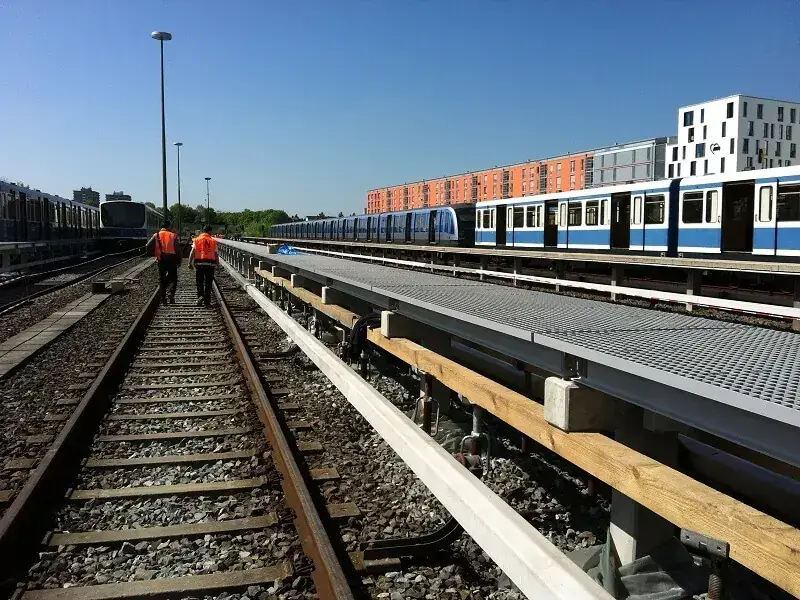
FRP pultruded walkway on a rail transit platform
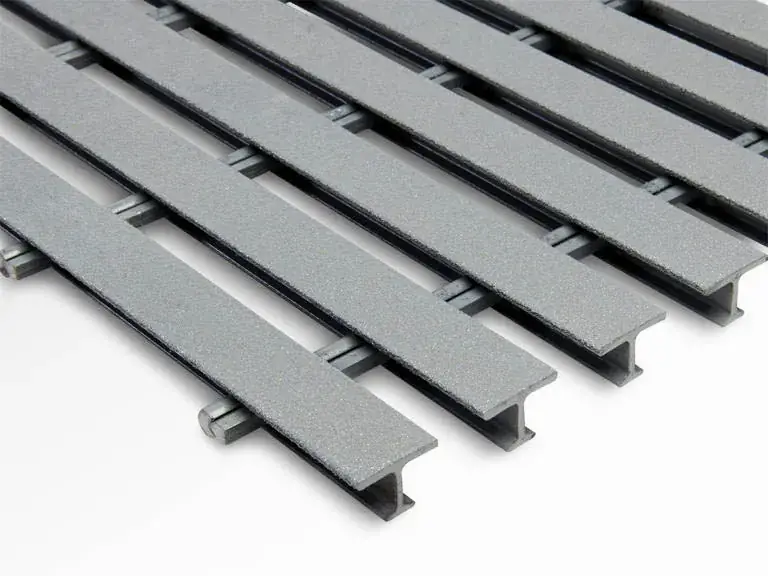
FRP pultruded profiles for bridge under-deck access
FRP trench grating for roadside infrastructure
Solutions for Every Process Area
Engineered FRP solutions mapped to each stage of your facility — from corrosive process zones to high-traffic access routes.
FRP walkways and under-deck access systems for bridge inspection.
Lightweight, fire-retardant walkways along tunnel walls.
Insulated platforms and cable trough covers in electrified rail.
Access platforms and ladders for gantry and signage structures.
Technical Specifications & Compliance
Application-specific engineering reference for Transportation & Infrastructure — corrosion rating, load criteria, governing codes and the recommended ZeAllgrate configuration. Use this as the specification starting point; final design must be verified against certified load/span charts and the project's governing codes.
| Parameter | Specification for Transportation & Infrastructure |
|---|---|
| Corrosion Level | Medium De-icing salts, road runoff and atmospheric pollution; plus weight limits on aging structures. |
| Typical Load Requirements | Bridge inspection walkways 50 psf (2.4 kN/m²) pedestrian; maintenance-vehicle decks 250 psf (12 kN/m²) or AASHTO lane loads; transit platform edge loads per AREMA. |
| Applicable Standards & Regulations | AASHTO LRFD (bridge design), AREMA (commuter/rail), OSHA 1910.28/1910.29, NFPA 130 (fixed guideway transit/tunnel fire), ISO 14122, local DOT specifications. |
| Recommended Resin System | ZeAll ISO for general bridge & road service; ZeAll FR fire-retardant grade mandatory in tunnels and transit subways; UV-stabilized for exposed structures. |
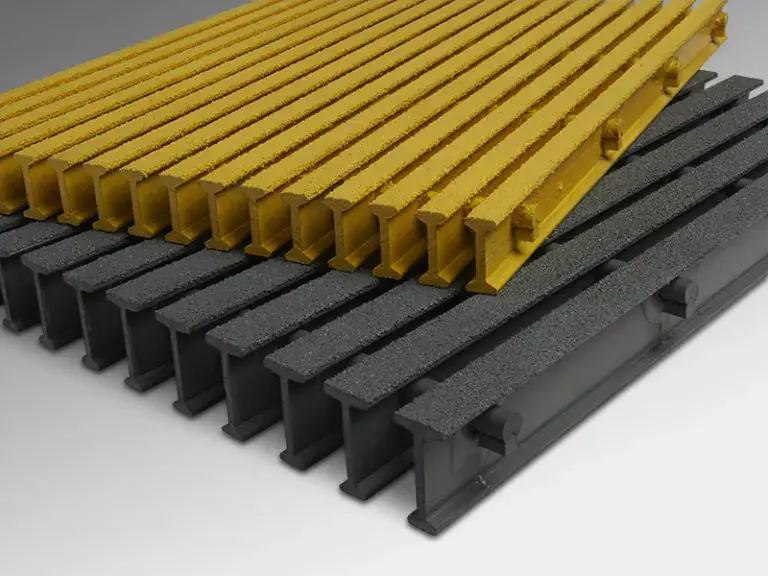
| Recommended Grating Type | Pultruded I6015/T5020 for under-deck bridge inspection walkways (weight-critical); ZeAll FR pultruded for tunnel service; Molded 38.1 mm for station-platform edge covers. |
Resin systems: ZeAll VE (vinyl ester — severe corrosion), ZeAll ISO (isophthalic polyester — general service), ZeAll FDA (food/potable grade), ZeAll FR (extra flame-retardant), Phenolic (fire/smoke-critical). Grating types: Molded (bi-directional), Pultruded (long-span), Mini-Mesh (fine openings), HLC (high-load capacity).
Transportation Service Requirements
| Requirement | ZeAllgrate Response |
|---|---|
| Heavy / concentrated loads | Pultruded and high-load molded sections |
| Fire performance | E84 class per code for stations and tunnels |
| Wet slip risk | Grit-top on exposed decks and stairs |
| Long-life assets | Decades of service with no paint programme |
Specification Guidance
Transportation infrastructure specifies for load, fire and durability: bridge inspection walkways and station platforms are designed to the deflection-limited load table with the concentrated case checked, the E84 class is confirmed for rated areas, and grit-top handles the wet exposed surfaces. Lightweight panels install over live rail and road corridors with minimal disruption — no hot work, no heavy crane lifts. The case library documents bridge and station walkway installations.
Go Deeper with the ZeAllgrate Knowledge Base
Have a Transportation & Infrastructure Project?
Send us your application and environment details — our engineers respond within 24 hours with a technical solution.
Transportation Infrastructure Challenges & FRP Grating Solution
Bridge walkways, train platforms and tunnel escape routes face road salt, heavy vibration, public safety and increasingly strict fire/smoke codes.
| Challenge | Steel / Conventional Issue | FRP Grating Advantage |
|---|---|---|
| Bridge walkways and inspection platforms | Steel corrodes from de-icing road salts; sandblast and repaint cycle every 5–10 years. | FRP is immune to road salt; no repainting; 20+ year service life. |
| Heavy dead load on aging bridges | Steel grating adds significant dead load, often the limiting factor on old structures. | FRP is ~70% lighter — frees up bridge load capacity without structural re-rating. |
| Vibration fatigue from traffic | Steel fatigues under repeated traffic vibration; fasteners loosen; welds crack. | FRP does not fatigue; no rusted fasteners; no cracking welds. |
| Train / metro platform edges | Steel chips and rusts; uneven nosing becomes a trip hazard for passengers. | Smooth FRP nosing with durable yellow contrast; flat, even walking surface. |
| Fire and smoke in tunnels | Steel loses strength at ~500 °C; painted surfaces release dense smoke. | Phenolic FRP is Class A fire / low smoke / low toxicity per ASTM E84 / EN 45545. |
Recommended Resin & Surface System for Transportation Infrastructure
Open bridge decks use vinyl ester for salt; tunnels and underground stations switch to phenolic for fire and smoke.
| Application Zone | Resin | Surface Finish | Notes |
|---|---|---|---|
| Bridge walkways / salt zones | Vinyl ester (ZeAll VE) | Grit top | De-icing salt, wet winter roads, continuous weather. |
| Train platforms & open stations | Phenolic FR / vinyl ester | Grit top with yellow nosing | Public areas; fire/smoke awareness; edge safety. |
| Tunnel walkways / escape routes | Phenolic, Class A | Grit top | Low smoke, low toxicity in fire; enclosed public space. |
| General road / bridge deck access | Isophthalic (ZeAll ISO) | Grit top | Pedestrian maintenance, weather-exposed. |
Recommended FRP Grating Products for Transportation Infrastructure
Light, durable, fire-safe grating for bridges, platforms and transit tunnels.
FRP Molded Grating
Molded grit-top panel for general bridge walkways and pedestrian underpasses.
View product →Pultruded Grating
Long-span structural pultruded grating for bridge decks and station concourses.
View product →Anti-Slip GRP Grating
High-friction grit overlay for stair nosings, platform edges and icy approaches.
View product →Phenolic FRP Grating
Class-A fire / low-smoke phenolic for tunnels, underground stations and escape routes.
View product →Buyer's Checklist for Transportation-Infrastructure FRP Grating
Transportation specs are governed by codes — write the load, fire and salt requirements into the submittal.
| Check Item | Specification | Why It Matters |
|---|---|---|
| Load rating | Pedestrian 100 psf; vehicular / maintenance vehicles per project. | Meets ASCE 7 / AASHTO walking-working surface requirements. |
| De-icing salt resistance | Resin chart for NaCl, CaCl₂, magnesium chloride. | Prevents decades-long corrosion on winter roads. |
| Weight savings | Compare weight vs. steel in submittal (typically 70% lighter). | Justifies bridge load-rating relief on aging structures. |
| Fire / smoke rating | Class A flame spread; smoke density ≤ 450; per ASTM E84 / EN 45545. | Required in tunnels and underground public stations. |
| Vibration fatigue | Tested per project fatigue criteria; no fastener loosening. | Stays safe through decades of traffic vibration. |
| Impact resistance | Suitable for dropped tools and maintenance-equipment impact. | Avoids premature breakage on working bridges. |
Transportation Infrastructure FRP Grating — FAQs
Is FRP grating resistant to road salt and de-icing chemicals?
Yes — that is one of the most common reasons transportation owners switch from steel. Vinyl-ester or isophthalic FRP is unaffected by NaCl, calcium chloride, magnesium chloride and the de-icing brines used on highways and bridges. It will not rust, pit, or require the repeated sandblasting and repainting cycles that steel bridge decks demand, which is where most of the lifecycle savings come from.
How much weight does FRP grating save on bridges?
On a like-for-like load rating, FRP grating is typically about 70% lighter than steel. On aging or load-restricted bridges where adding dead load is the limiting factor, that weight saving can be the difference between widening, retrofitting, or simply replacing the walkway without a structural re-rating. The supporting steelwork also sees lower seismic and wind loads as a result.
What FRP is specified for train platforms and transit tunnels?
For open-air train and subway platforms we recommend pultruded FRP with a high-friction grit top and a contrasting yellow nosing. For tunnels, underground stations and any enclosed public escape route, specify phenolic (FR) grating, which carries a Class A flame-spread rating, very low smoke density and low toxic-gas emission per ASTM E84 and EN 45545 — critical when smoke evacuation governs the fire-safety design.
Why FRP Grating for Transportation Infrastructure?
FRP grating for transportation: lightweight bridge walkways, train platforms, transit tunnels. Road salt resistant, no rust.