
Microelectronics & Cleanroom FRP Grating Solutions
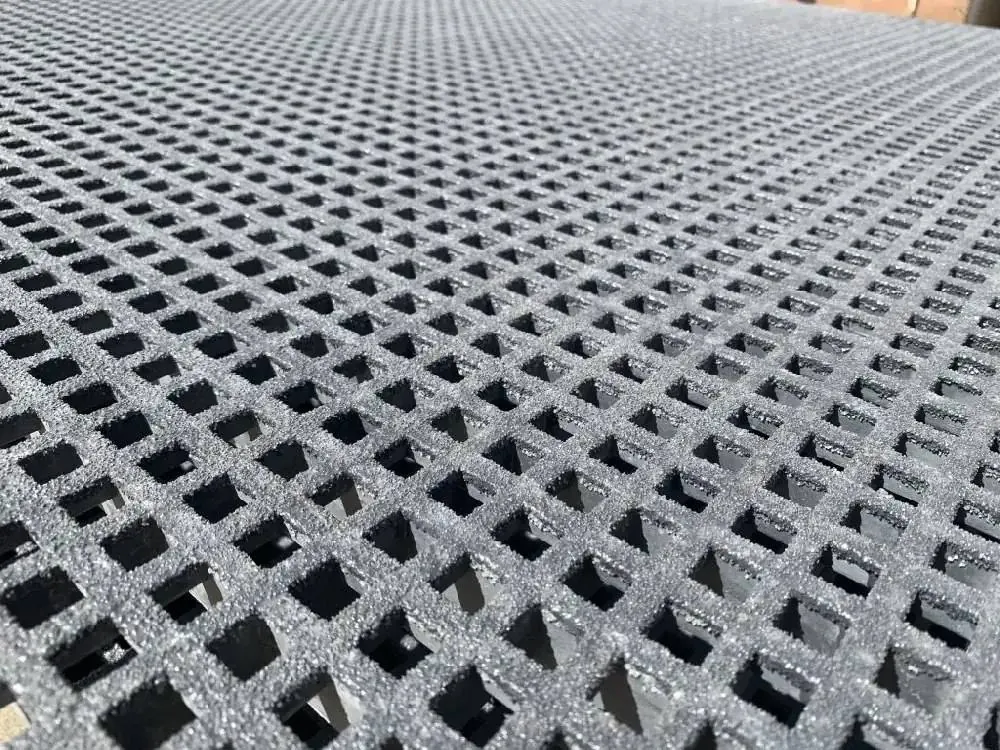
Why Microelectronics & Cleanroom Needs FRP
Semiconductor fabs demand materials that shed no particles, generate no static, and survive aggressive cleanroom chemicals. FRP grating — non-shedding, static-safe, chemically inert — protects yields in the world's most sensitive facilities.- Particle shedding contaminating wafers
- Static discharge damaging electronics
- Aggressive cleaning chemicals
- Corrosive process gases and exhaust
ZeAllgrate Solutions for Microelectronics & Cleanroom
ZeAllgrate smooth-mesh molded grating and covered platforms are engineered for cleanroom and fab environments, with resin systems compatible with fab chemical protocols.
Typical Applications
Cleanroom mezzanines
Sub-fab utility walkways
Process tool platforms
Chemical storage areas
CMP area access
Wafer fab maintenance decks
Project Gallery
Real ZeAllgrate FRP grating products and installations in service across this industry.
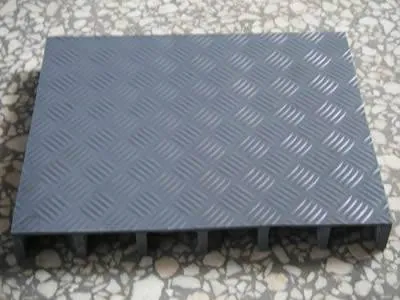
Smooth non-shedding FRP cover for a fab cleanroom
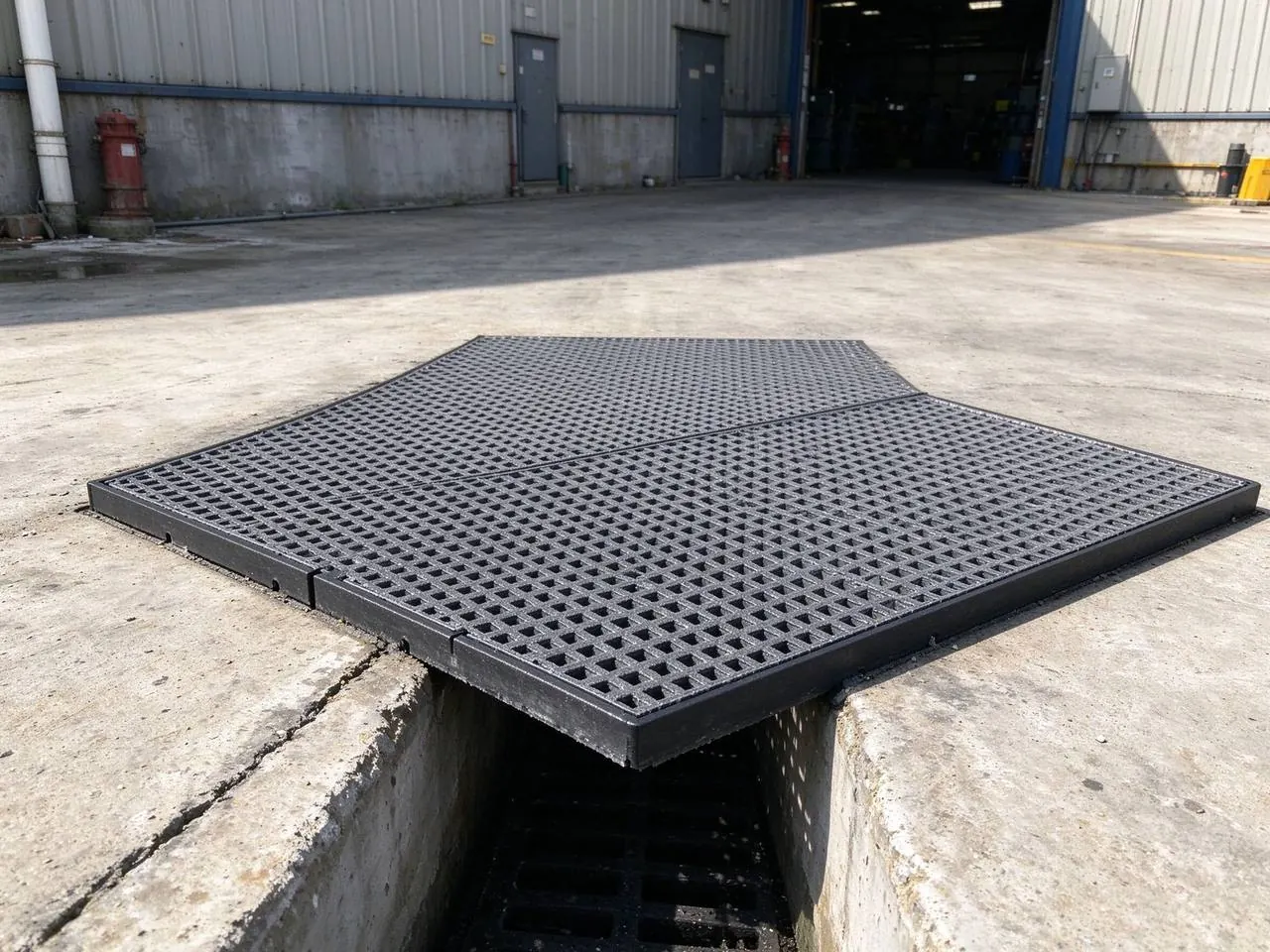
Covered FRP panel for sub-fab utility walkways
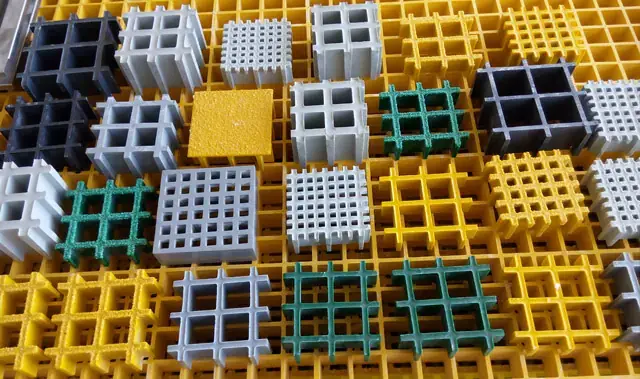
Molded FRP panel for fab process tool platforms
Solutions for Every Process Area
Engineered FRP solutions mapped to each stage of your facility — from corrosive process zones to high-traffic access routes.
Non-shedding, ESD-managed FRP flooring for cleanrooms.
Corrosion-resistant platforms for wet benches and chemical baths.
Platforms over utilities with cleanroom-compatible materials.
Technical Specifications & Compliance
Application-specific engineering reference for Microelectronics & Cleanroom — corrosion rating, load criteria, governing codes and the recommended ZeAllgrate configuration. Use this as the specification starting point; final design must be verified against certified load/span charts and the project's governing codes.
| Parameter | Specification for Microelectronics & Cleanroom |
|---|---|
| Corrosion Level | Medium Wet-bench chemicals, acid/soap vapors, and strict particle & ESD control requirements. |
| Typical Load Requirements | Sub-fab & process-tool platforms 50 psf (2.4 kN/m²) pedestrian; raised-floor equipment zones designed for tool point loads (chillers, pumps). |
| Applicable Standards & Regulations | SEMI (equipment & facilities guidelines), ISO 14644 (cleanroom), JEDEC (ESD/ESDS control), FDA 21 CFR (if medical-device fabs), OSHA 1910.132 (PPE) & 1910.22. |
| Recommended Resin System | ZeAll FDA smooth, non-shedding, low-extractable grade for cleanroom; ZeAll VE for wet-bench & chemical-delivery areas; ESD-managed (conductive) option where static control is specified. |
| Recommended Grating Type | Molded 38.1 mm smooth-top or solid covered panels in classified areas; Pultruded profiles in sub-fab/service corridors; Mini-Mesh avoided where particle shedding is a risk. |
Resin systems: ZeAll VE (vinyl ester — severe corrosion), ZeAll ISO (isophthalic polyester — general service), ZeAll FDA (food/potable grade), ZeAll FR (extra flame-retardant), Phenolic (fire/smoke-critical). Grating types: Molded (bi-directional), Pultruded (long-span), Mini-Mesh (fine openings), HLC (high-load capacity).
Cleanroom Service Requirements
| Requirement | ZeAllgrate Response |
|---|---|
| Non-conductive structure | FRP is inherently non-conductive; no earthing burden |
| Low particle shedding | Smooth covered surfaces where specified |
| Chemical storage areas | Vinyl ester for acid/etchant contact |
| Cleanability | Non-porous, wipe-clean panels; flush edges |
Specification Guidance
Cleanroom mezzanines and sub-fab walkways are specified for non-conductivity, low shedding and chemical resistance: smooth or covered surfaces on traffic decks, vinyl ester where etchants and acids store or flow, and the load table applied to the mezzanine grid with the deflection limit that keeps the deck stiff under vibration-sensitive tools. Coordinate the panel orientation and cut-outs on the fabrication drawing; the case library documents a cleanroom sub-floor installation.
Go Deeper with the ZeAllgrate Knowledge Base
Have a Microelectronics & Cleanroom Project?
Send us your application and environment details — our engineers respond within 24 hours with a technical solution.
Microelectronics & Cleanroom Challenges & FRP Grating Solution
Microelectronics & Cleanroom facilities face corrosive, wet and high-traffic conditions that steel, concrete and wood cannot serve cost-effectively. The table below maps each field challenge to the conventional-material failure mode and to the ZeAllgrate FRP advantage.
| Challenge | Steel / Conventional Issue | FRP Grating Advantage |
|---|---|---|
| ESD / electrostatic discharge control | Bare steel is conductive but uncontrolled; standard FRP builds static up to 10¹² Ω | Antistatic FRP holds surface resistivity at 10⁶–10⁹ Ω — the ESD-safe window |
| Low particle shedding | Steel rusts and sheds oxide particles; welds trap contamination | Non-corrosive, sealed surface; low particle generation from day one |
| Chemical resistance (IPA, acids, solvents) | Steel corrodes from IPA and weak acids; stainless still needs care | Vinyl ester FRP resists IPA, weak acids and common cleanroom solvents |
| Cleanability | Steel seams and weld beads trap particles and are hard to wipe | Smooth resin surface with sealed edges; wipe-down with approved chem wipes |
| Reconfigurable raised flooring | Steel support grids are heavy and difficult to modify after build-out | Lightweight FRP panels; easy to lift, move and re-cable under the floor |
Recommended Resin & Surface System for Microelectronics & Cleanroom
Resin choice is the single most important specification decision. Match the resin to the worst-case chemical and thermal exposure in each zone, and choose the surface finish for slip resistance and cleanability.
| Application Zone | Resin | Surface Finish | Notes |
|---|---|---|---|
| ESD-sensitive tooling & sub-floor | Antistatic vinyl ester | Smooth, sealed | Surface resistivity 10⁶–10⁹ Ω |
| Chemical wash / process zones | Vinyl ester (VE) | Smooth | IPA, weak acid and solvent resistant |
| General cleanroom walkways | Isophthalic / antistatic | Smooth, white | Low particle; color-coded by zone |
| Under-floor cable & air plenums | Antistatic grade | Sealed edges | Particle control at every cut edge |
Recommended FRP Grating Products for Microelectronics & Cleanroom
ZeAllgrate supplies the molded, pultruded, anti-slip and fire-rated grating panels most commonly specified for this industry. Click through to each product page for load/span charts and datasheets.
Molded FRP Grating
Bi-directional molded grating — the general-purpose workhorse for walkways, flooring and drainage.
Phenolic FRP Grating
Low-smoke, low-toxicity phenolic resin for fire-rated and confined-space applications.
Pultruded FRP Grating
Unidirectional pultruded profiles for long spans, higher load capacity and structural framing.
Anti-Slip GRP Grating
Grit-top / concave surface systems for permanently wet, oily or high-slip-risk traffic zones.
Buyer’s Checklist for Microelectronics & Cleanroom FRP Grating
Use this checklist when issuing RFQs or reviewing supplier submittals. Each item is a common source of cost, delay or premature failure in this industry.
| Check Item | Specification | Why It Matters |
|---|---|---|
| Surface resistivity | 10⁶–10⁹ Ω (ESD-safe) | Protects wafers and sensitive devices from ESD damage |
| Cleanroom class compatibility | ISO Class 5–8 compatible materials | Confirms low particle shedding for the intended zone |
| Chemical resistance | Resistant to IPA, weak acids and common solvents | Survives routine cleanroom chemical wiping |
| Sealed edges | All cut edges resin-sealed | Prevents glass-fiber particle release into the room |
| Color | White or light neutral | Visual cleanliness; supports zone color-coding |
| Outgassing | Low-outgassing resin formulation | Prevents VOC contamination of critical process areas |
Microelectronics & Cleanroom FRP Grating — FAQs
Is FRP grating ESD-safe for cleanrooms?
Yes — antistatic (dissipative) grade FRP grating is formulated to hold a stable surface resistivity of 10⁶–10⁹ ohms, the ESD-safe window. Unlike bare steel (conductive, <10⁴ Ω) or standard FRP (which can build up static above 10¹² Ω), antistatic FRP safely bleeds charge to ground.
What cleanroom class can FRP grating handle?
Sealed, smooth, antistatic FRP panels are routinely used in ISO Class 7 and 8 cleanrooms, and with proper edge sealing and low-outgassing resin can support ISO Class 6 environments. They are not typically used in the most stringent Class 1–2 processing areas, where solid epoxy floors dominate.
How do you clean FRP grating in a cleanroom?
Wipe with a lint-free cloth dampened with IPA or the facility-approved cleanroom disinfectant. The smooth, non-porous resin surface does not absorb chemicals, and sealed cut edges prevent particle release. Avoid abrasive scouring pads, which can mar the surface and increase particle shedding.
Why FRP Grating for Microelectronics Cleanroom?
FRP grating for cleanrooms: ESD-safe options, non-particle-shedding, washdown-friendly. Sub-floors and access panels.