
Telecommunications FRP Grating Solutions
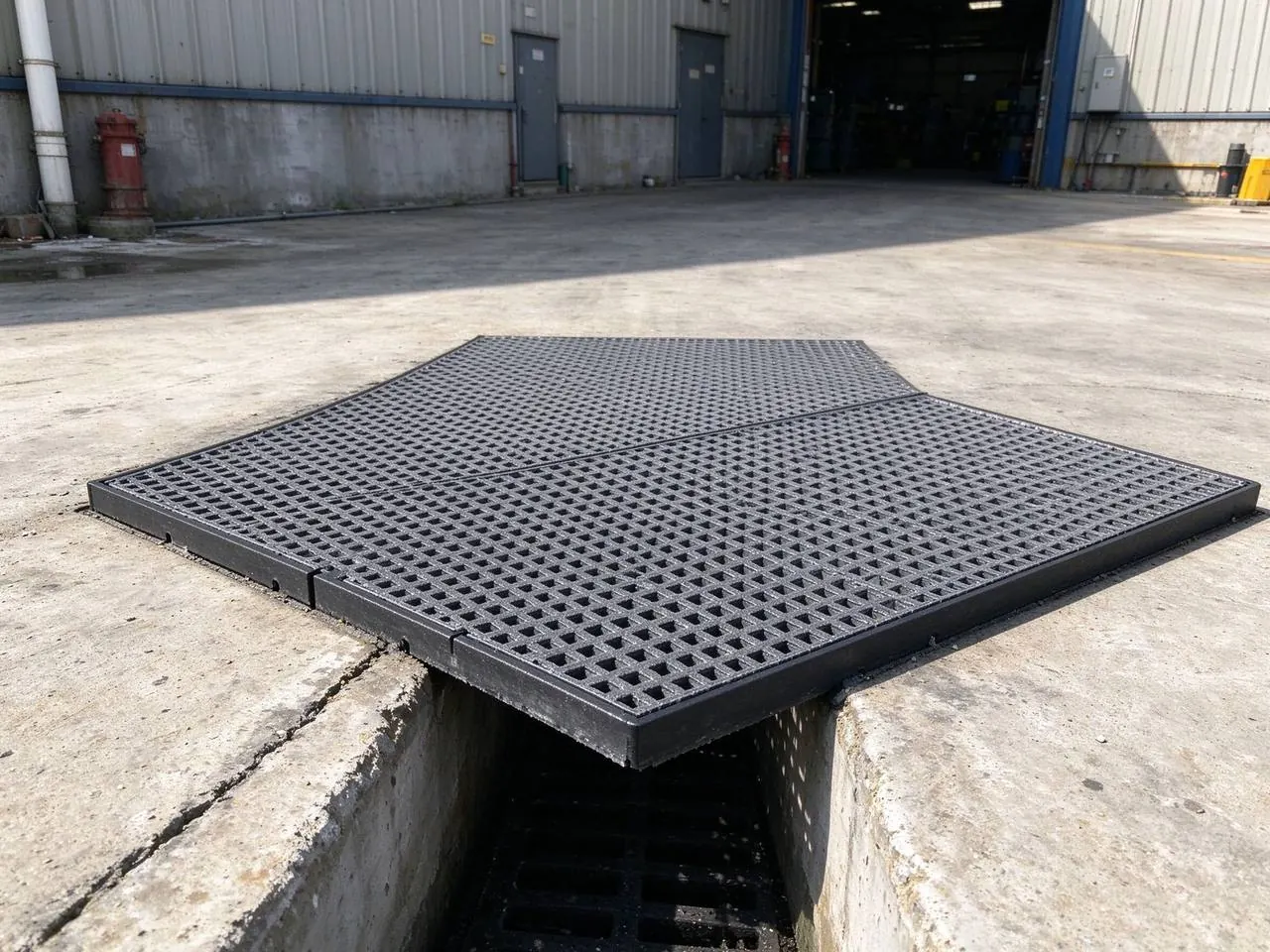
Why Telecommunications Needs FRP
Telecom towers and facilities need access platforms that don't interfere with RF signals and don't corrode in exposed locations. FRP is RF-transparent, non-conductive and maintenance-free — the ideal material for telecom infrastructure.- RF signal interference from conductive materials
- Corrosion in exposed rooftop and tower locations
- Electrical safety near antennas
- Weight limits on rooftop structures
ZeAllgrate Solutions for Telecommunications
ZeAllgrate non-conductive grating and structural profiles support antennas, cable management and access systems without disturbing signal integrity.
Typical Applications
Tower access platforms
Rooftop equipment decks
Antenna support structures
Cable management walkways
Equipment shelter platforms
Microwave tower access
Project Gallery
Real ZeAllgrate FRP grating products and installations in service across this industry.
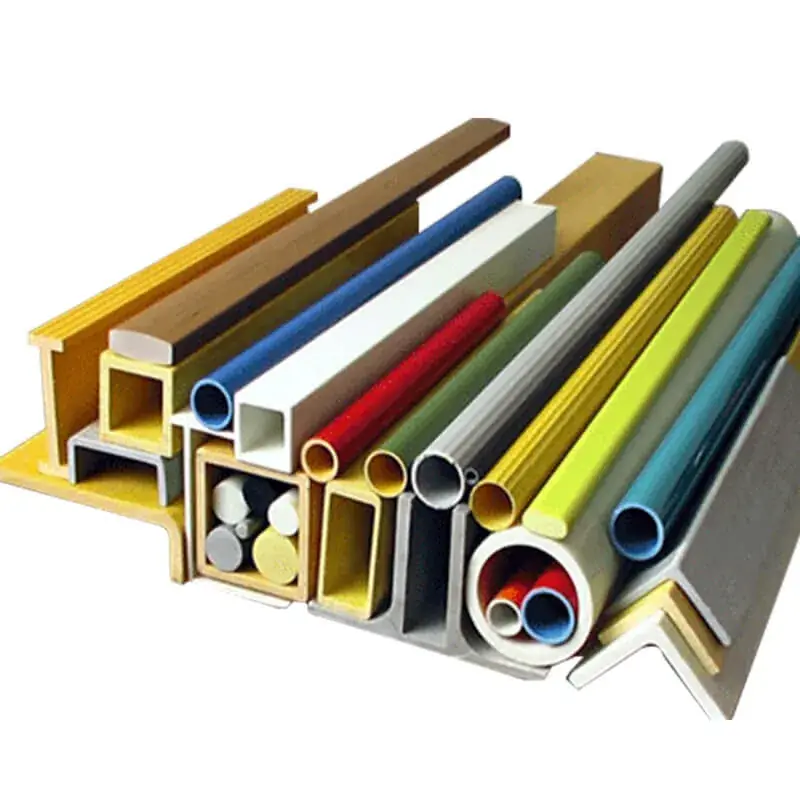
FRP pultruded profiles for telecom equipment support
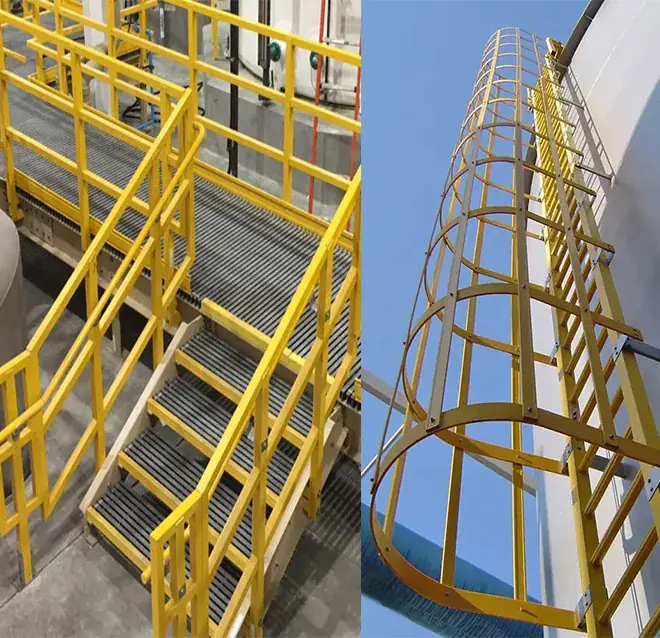
FRP stair tower for rooftop telecom equipment access
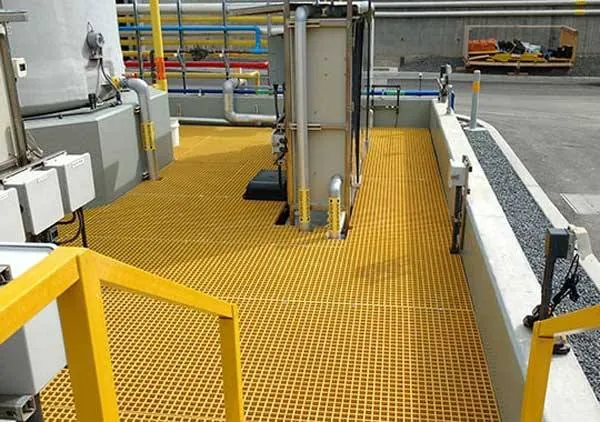
FRP access tower for rooftop telecom cabinets
Solutions for Every Process Area
Engineered FRP solutions mapped to each stage of your facility — from corrosive process zones to high-traffic access routes.
RF-transparent, non-conductive walkways over cable runs.
Lightweight platforms for antennas and tower equipment.
Acid-resistant grating and covers in battery charging areas.
Technical Specifications & Compliance
Application-specific engineering reference for Telecommunications — corrosion rating, load criteria, governing codes and the recommended ZeAllgrate configuration. Use this as the specification starting point; final design must be verified against certified load/span charts and the project's governing codes.
| Parameter | Specification for Telecommunications |
|---|---|
| Corrosion Level | Low–Medium Outdoor atmospheric exposure, rooftop UV, and occasional battery-acid mist in power rooms. |
| Typical Load Requirements | Rooftop & tower access platforms 50 psf (2.4 kN/m²) pedestrian; antenna-support loads checked against TIA-222 wind/seismic; rooftop decks also rated for snow/wind. |
| Applicable Standards & Regulations | TIA-222 (structural antenna-tower standard, adapted for FRP alternative), OSHA 1910.28 & 1910.29 (fall protection), NEC Article 110 (electrical safety), EIA/ETA antenna siting guidelines, local building code. |
| Recommended Resin System | ZeAll ISO UV-stabilized for rooftop & tower exposure; ZeAll VE for battery rooms & rectifier areas; fully non-conductive, RF-transparent glass reinforcement. |
| Recommended Grating Type | Pultruded I4015/I5020 lightweight tower & rooftop platforms; Molded 38.1 mm for equipment-room walkways; all-FRP assembly (no metal tie-bars) to preserve RF transparency. |
Resin systems: ZeAll VE (vinyl ester — severe corrosion), ZeAll ISO (isophthalic polyester — general service), ZeAll FDA (food/potable grade), ZeAll FR (extra flame-retardant), Phenolic (fire/smoke-critical). Grating types: Molded (bi-directional), Pultruded (long-span), Mini-Mesh (fine openings), HLC (high-load capacity).
Telecom Service Requirements
| Requirement | ZeAllgrate Response |
|---|---|
| Non-conductive structure | FRP keeps tower and rooftop access electrically isolated |
| Light weight | Easily handled at height; low transport cost |
| UV & weather | UV-stabilised grades |
| Antenna proximity | Non-metallic construction avoids RF interaction and corrosion |
Specification Guidance
Telecom platforms are specified for non-conductivity and light weight: FRP grating and handrail near antennas carry no RF interaction and no earthing burden, and the UV-stabilised construction survives decades on towers and rooftops. Panels are lightweight for hoisting and field fit; SS316 hardware matches the outdoor service. Specify the span to the support grid from the load table and confirm the fire class for rooftop-rated areas.
Go Deeper with the ZeAllgrate Knowledge Base
Have a Telecommunications Project?
Send us your application and environment details — our engineers respond within 24 hours with a technical solution.
Telecommunications Challenges & FRP Grating Solution
Cell towers, microwave repeater sites and 5G edge nodes demand platforms that are RF-transparent, lightning-safe and light enough to haul up a tower by hand.
| Challenge | Steel / Conventional Issue | FRP Grating Advantage |
|---|---|---|
| Outdoor tower platforms and walkways | Steel rusts despite hot-dip galvanizing; requires ongoing inspection and touch-up painting. | FRP needs no painting; 20+ year outdoor life in UV and weather. |
| Lightning protection on towers | Steel conducts lightning; creates dangerous side-flash and grounding paths near radios. | FRP is dielectric — no lightning conduction path through the platform itself. |
| EMI / RFI near antennas and radios | Steel reflects and reradiates RF; can distort antenna patterns and PIM. | FRP is RF-transparent; does not affect antenna patterns or introduce PIM. |
| Remote installation weight | Steel sections are heavy; difficult to haul and assemble on top of towers. | FRP is ~70% lighter; easier manual handling and helicopter lifts. |
| UV, ice and snow load | Steel fatigues under ice/snow cycling; galvanizing cracked by thermal movement. | UV-stable resin; handles ice/snow structural loads; no corrosion to fatigue. |
Recommended Resin & Surface System for Telecommunications
UV-stabilized isophthalic polyester is the standard for outdoor comm-tower platforms; avoid carbon black or any metallic filler.
| Application Zone | Resin | Surface Finish | Notes |
|---|---|---|---|
| Tower platforms & walkways | Isophthalic, UV-stabilized | Grit top | Outdoor, exposed, climber traffic. |
| Near antenna / radio arrays | Isophthalic, no carbon filler | Smooth or grit | RF-transparent zone — no EMI distortion. |
| Ice / snow load zones | Isophthalic, structural pultruded | Grit top | Long spans under wind, ice and snow. |
| Ground equipment shelters | Isophthalic | Smooth or grit | Pedestrian access around cabinets and power. |
Recommended FRP Grating Products for Telecommunications
Light, RF-transparent, lightning-safe platforms for the modern cell site.
FRP Molded Grating
Molded panel for equipment pads and ground-level walkways around shelters.
View product →Pultruded Grating
Long-span pultruded panels for tower platforms and catwalks where weight matters.
View product →Anti-Slip GRP Grating
Grit-top overlay for ladder landings, tower access platforms and climbing-rest points.
View product →Phenolic FRP Grating
Class-A fire / low-smoke phenolic for indoor data halls, power shelters and tower-base equipment rooms.
View product →Buyer's Checklist for Telecommunications FRP Grating
Write the spec around dielectric, RF-transparency and weight — not just structural load.
| Check Item | Specification | Why It Matters |
|---|---|---|
| Non-conductive / dielectric | Volume resistivity ≥ 10³⁴ Ω·m; no carbon-black pigment. | Eliminates an unintended lightning conduction path. |
| EMI / RFI transparent | No metal fillers; no steel supports in antenna near-field. | Prevents pattern distortion on microwave / 5G arrays. |
| Lightweight installation | Weight ≤ 30% of equivalent steel. | Eases manual tower climbing and helicopter lifts. |
| UV / weather rating | UV-stabilized resin; 10+ year outdoor exposure. | Avoids chalk and microcracking at remote sites. |
| Load rating | Technician + tools + test equipment; typically 100 psf. | OSHA-compliant walking-working surface. |
| Ice / snow load | Design per local wind & snow codes. | Prevents overload in northern and high-altitude climates. |
Telecommunications FRP Grating — FAQs
Does FRP grating interfere with antennas or EMI?
No. Standard glass-reinforced polyester (no carbon filler, no metallic aggregate) is essentially transparent to RF and microwave signals. It is routinely used on cell-tower platforms, microwave repeater sites and satellite ground stations specifically because it does not reflect or reradiate energy the way steel grating, ladders and platforms do. Just specify “no carbon black, no metal filler” on the order.
Is FRP lightning-safe on communication towers?
Because FRP is non-conductive, platforms, walkways and equipment stands made from it do not provide an unintended lightning current path the way steel structures can. The tower's existing lightning down-conductor and bonding system still governs the overall protection design, but FRP removes one common source of side-flash and equipment damage. Always keep the tower's engineered grounding and bonding intact.
Can FRP support a technician and test equipment on tower platforms?
Yes. ZeAllgrate pultruded FRP grating is designed and load-rated for pedestrian walkways and equipment platforms per OSHA 1910.28/29 and ASCE 7 — typically 100 psf (4.8 kN/m²) uniform live load plus code-required wind and ice. The same strength is achieved at roughly 30% of the weight of steel, which is the whole reason it is preferred on top of existing towers where adding dead load is restricted.
Why FRP Grating for Telecommunications?
FRP grating for telecom: non-conductive tower platforms, equipment shelters, cable trench covers. Lightweight, no lightning risk.